Taper vs. Fade: What's the Difference?
Taper or fade? An Erin, Ontario barber explains the difference, the low taper fade, which suits your hair and job, and exactly what to say in the chair.
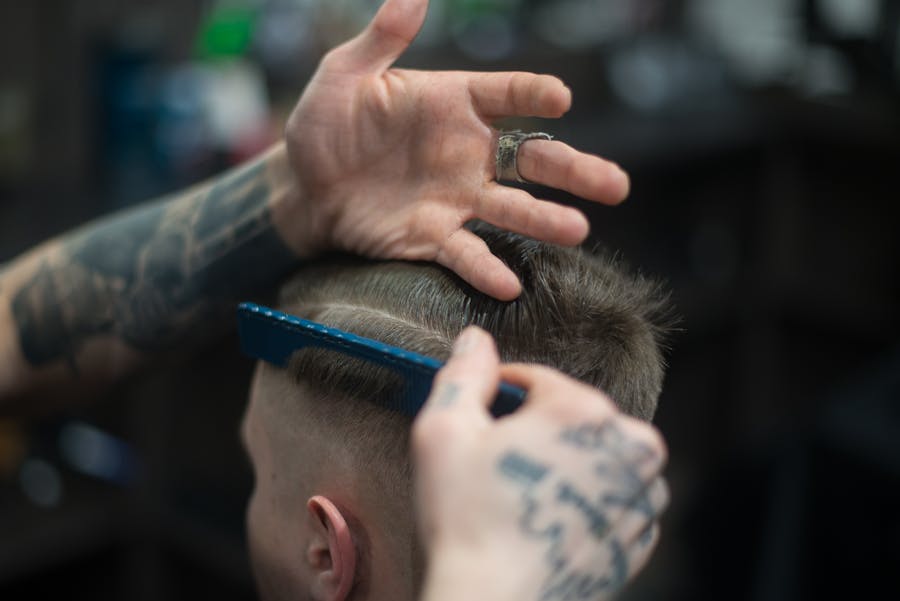
“Taper” and “fade” get used like they mean the same thing, and that’s how a lot of guys end up with a haircut they didn’t ask for. They’re related, but they’re not the same cut.
The short version: a taper gradually shortens your hair at the sideburns and neckline, usually leaving some length at the bottom. A fade blends shorter all the way around the sides and back, often down to bare skin. A taper is softer and grows out gracefully; a fade is sharper, with more contrast, and needs touching up sooner. Every fade is technically a type of taper — but not every taper is a fade.
Taper vs. fade at a glance
| Taper | Fade | |
|---|---|---|
| Where it gets shorter | Sideburns and neckline | All around the sides and back |
| How short it goes | Short, usually not bare skin | Down to the skin, or close to it |
| Look | Soft, natural, classic | Sharp, clean, high-contrast |
| Grows out | Gradually, stays tidy longer | Growth shows within 1–3 weeks |
| Touch-ups | Every 3–4 weeks | Every 2–3 weeks |
What is a taper?
A taper follows your natural hairline. The length steps down gradually as it reaches the edges, so the sideburns and the back of the neck look clean and finished without exposing much skin. From a distance it reads as a neat, well-kept haircut rather than a “style”.
Tapers are great if you:
- work somewhere with a conservative dress code, a uniform or a helmet;
- are growing your hair out and want it to look intentional along the way;
- don’t want to see your barber every two weeks.
A low taper keeps the change right at the hairline. A high taper starts the step-down higher on the sides for a more obviously short finish.
What is a fade?
A fade takes the hair from longer on top down to very short — often bare skin — around the entire sides and back, with a seamless blend in between. Where that blend starts gives each fade its name:
- Low fade — starts just above the ears. Subtle and office-friendly.
- Mid fade — starts around the temples. Balanced on almost everyone.
- High fade — starts high on the sides for maximum contrast.
- Skin (bald) fade — any fade taken all the way down to the skin.
- Burst and drop fades — curve around or dip behind the ear.
Fades are the most-requested cut in our chair because they look sharp with nearly any top: textured crops, curls, side parts and pompadours. For a deeper look at fade heights and face shapes, read our 2026 skin fade guide.
The low taper fade: the best of both
The low taper fade is the cut people keep asking about. It’s a hybrid: we fade down to the skin only at the sideburns and neckline, and keep a tapered length everywhere else on the sides. You get the crisp, clean edge of a fade with the soft outline and slower grow-out of a taper.
It’s a great middle ground if a full skin fade feels like too much but a classic taper feels too plain.
Which one should you get?
- Want the most low-maintenance option? Go with a taper. It still looks tidy at week four.
- Want a sharp, modern look? Go with a fade. Pick low or mid if you want to keep it subtle.
- Strict dress code at work or school? A low taper or a low fade.
- Curly or coily hair? Both work beautifully. Fades show off definition on top; tapers keep a fuller, rounder shape.
- Wear a beard? A fade or taper that blends into your beard connects the whole look — ask about the Haircut & Beard combo.
How to ask your barber for exactly what you want
The words you use matter. Try one of these:
- “Low taper — keep the length on the sides, clean up the sideburns and neckline.”
- “Mid skin fade, blended into a #2 on the sides, textured on top.”
- “Low taper fade — skin at the sideburns and the back, keep the rest soft.”
If you mention clipper guard numbers, here’s what they mean:
| Guard | Length left |
|---|---|
| #1 | 1/8 inch (about 3 mm) |
| #2 | 1/4 inch (about 6 mm) |
| #3 | 3/8 inch (about 10 mm) |
| #4 | 1/2 inch (about 13 mm) |
And tell your barber how often you realistically get your hair cut. If it’s every five weeks, a skin fade will spend half that time looking grown out — a taper might serve you better. (Here’s how often each style needs a cut.)
Bring a photo if you have one. It’s the fastest way to get us on the same page, and the consultation at the start of every appointment at Moe’s is exactly the time to sort it out.
Get your taper or fade in Erin
Tapers and fades are both done within our Classic Haircut at $30, and we blend low, mid, high, burst and drop fades every day at 99 Trafalgar Rd in Erin. Clients come in from Hillsburgh, Acton, Rockwood, Caledon and beyond.
Book your taper or fade online, or walk in when a chair is open.
Frequently asked questions
Is a taper the same as a fade?
No. A taper shortens the hair gradually at the sideburns and neckline and usually leaves some length at the bottom. A fade blends shorter all the way around the sides and back, often down to bare skin. Every fade is a kind of taper, but not every taper is a fade.
Which is more professional, a taper or a fade?
A low taper is the most conservative choice for offices, uniforms and strict dress codes. A low fade is also workplace-friendly; high and skin fades read bolder.
What is a low taper fade?
A hybrid: the hair is faded down to the skin only at the sideburns and the neckline, while the rest of the sides keep a tapered length. You get a crisp edge with a soft, natural outline.
How often should I touch up a taper or a fade?
Fades look sharpest on a two-to-three-week cycle because the shortest hair shows growth first. Tapers can usually go three to four weeks.
How much is a taper or a fade at Moe's Barbershop?
Both are done within our Classic Haircut at CAD$30. Add a connected beard lineup with the Haircut & Beard combo for CAD$50.
Ready for a fresh cut?
Book your appointment at Moe's Barbershop in Erin, Ontario.
Book an Appointment